Home > Press > Leti and Inac Show Path to Creating Building Blocks of Quantum Processors With 28Si isotope in a CMOS Line: Fabrication of Isotopically Enriched, Industry-Compatible Wafers Points Way To Realizing Silicon Spin Quantum Bits with Enhanced Fidelity
 |
Abstract:
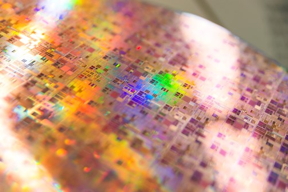
CEA-Leti, a French technology research institute of the CEA and Inac, a joint fundamental research institute between the CEA and the University Grenoble Alpes, today announced a breakthrough towards large-scale fabrication of quantum bits, or qubits, the elementary bricks of future quantum processors. They demonstrated on a 300 mm pre-industrial platform a new level of isotopic purification in a film deposited by chemical vapor deposition (CVD). This enables creating qubits in thin layers of silicon using a very high purity silicon isotope, 28Si, which produces a crystalline quality comparable to thin films usually made of natural silicon.
Leti and Inac Show Path to Creating Building Blocks of Quantum Processors With 28Si isotope in a CMOS Line: Fabrication of Isotopically Enriched, Industry-Compatible Wafers Points Way To Realizing Silicon Spin Quantum Bits with Enhanced Fidelity
Grenoble, France | Posted on March 20th, 2018“Using the isotope 28Si instead of natural silicon is crucial for the optimization of the fidelity of the silicon spin qubit,” said Marc Sanquer, a research director at Inac. “The fidelity of the spin qubit is limited to small values by the presence of nuclear spins in natural silicon. But spin qubit fidelity is greatly enhanced by using 28Si, which has zero nuclear spin. We expect to confirm this with qubits fabricated in a pre-industrial CMOS platform at CEA-Leti.”
Qubits are the building blocks of quantum information. They can be made in a broad variety of material systems, but when it comes to the crucial issue of large-scale integration, the range of possible choices narrows significantly. Silicon spin qubits have a small size and are compatible with CMOS technology. They therefore present advantages for large-scale integration compared to other types of qubits.
Since 2012, when the first qubits that relied on electron spins were reported, the introduction of isotopically purified 28Si has led to significant enhancement of the spin coherence time. The longer spin coherence lasts, the better the fidelity of the quantum operations.
Quantum effects are essential to understanding how basic silicon micro-components work, but the most interesting quantum effects, such as superposition and entanglement, are not used in circuits. The CEA-Leti and Inac results showed that these effects can be implemented in CMOS transistors operated at low temperature.
CEA-Leti and Inac previously reported preliminary steps for demonstrating a qubit in a process utilizing a natural silicon-on-insulator (SOI) 300 mm CMOS platform1. The qubit is an electrically controlled spin carried by a single hole in a SOI transistor. In a paper published in npj Quantum Information2., CEA-Leti and Inac reported that an electron spin in a SOI transistor can also be manipulated by pure electrical signals, which enable fast and scalable spin qubits.
“To progress towards a practical and useful quantum processor, it is now essential to scale up the qubit,” said Louis Hutin, a research engineer in CEA-Leti’s Silicon Components Division. “This development will have to address variability, reproducibility and electrostatic control quality for elementary quantum bricks, as is done routinely for standard microprocessors.”
To help CEA-Leti and Inac leverage nuclear spin free silicon in the CMOS platform, a silicon precursor was supplied by Air Liquide, using an isotopically purified silane of very high isotopic purity with a 29Si isotope content of less than 0.00250 percent, prepared by the Institute of Chemistry of High-Purity Substances at the Russian Academy of Sciences. The 29Si isotope is present at 4.67 percent in natural silicon and is the only stable isotope of silicon that carries a nuclear spin limiting the qubit coherence time.
A secondary ion mass spectrometry (SIMS) analysis done on the CVD-grown layer using this purified silane precursor showed 29Si concentration less than 0.006 percent, and 30Si less than 0.002 percent, while 28Si concentration was more than 99.992 percent. These unprecedented levels of isotopic purification for a CVD-grown epilayer on 300 mm substrates are associated with surfaces that are smooth at the atomic scale, as verified by atomic force microscopy (AFM), haze and X-ray reflectometry measurements.
Leveraging their scientific and technological expertise, and the specific opportunities associated with the 300 mm silicon platform on the Minatec campus, CEA-Leti and Inac will continue to contribute to the scientific, technological and industrial dynamic on quantum technologies, enhanced by the implementation of the EC’s FET Flagships initiative in this domain.
1. “A CMOS silicon spin qubit”, arXiv:1605.07599 Nature Communications 7, Article number: 13575 (2016) doi:10.1038/ncomms13575
2. “Electrically driven electron spin resonance mediated by spin-valley-orbit coupling in a silicon quantum dot", Nature PJ Quantum Information (2018) 4:6; doi:10.1038/s41534-018-0059-1
####
About Leti
CEA-Leti, a technology research institute at CEA, is a global leader in miniaturization technologies enabling smart, energy-efficient and secure solutions for industry. Founded in 1967, Leti pioneers micro-& nanotechnologies, tailoring differentiating applicative solutions for global companies, SMEs and startups. Leti tackles critical challenges in healthcare, energy and digital migration. From sensors to data processing and computing solutions, Leti’s multidisciplinary teams deliver solid expertise, leveraging world-class pre-industrialization facilities. With a staff of more than 1,900, a portfolio of 2,700 patents, 91,500 sq. ft. of cleanroom space and a clear IP policy, the institute is based in Grenoble, France, and has offices in Silicon Valley and Tokyo. Leti has launched 60 startups and is a member of the Carnot Institutes network. Follow us on www.leti-cea.com and @CEA_Leti.
CEA Tech is the technology research branch of the French Alternative Energies and Atomic Energy Commission (CEA), a key player in innovative R&D, defence & security, nuclear energy, technological research for industry and fundamental science, identified by Thomson Reuters as the second most innovative research organization in the world. CEA Tech leverages a unique innovation-driven culture and unrivalled expertise to develop and disseminate new technologies for industry, helping to create high-end products and provide a competitive edge.
About Inac (France)
Inac, a joint fundamental research institute between CEA and University Grenoble Alpes with a staff of 500, is a major player in basic research. Its research focuses are on (i) nanoscience, namely photonics, spintronics, nanoelectronics and nanoscience for new technologies for energy; (ii) cryogenic technologies mainly for space and large instruments; (iii) health (DNA damages) & biosensors; and (iv) related simulation and characterization. Inac has three major commitments: (i) creating frontier science results in basic research (350 publications per year); (ii) creating value by ensuring technology transfers (through typ. 20 patents per year, start-ups and partnerships in applied research); and (iii) training of first-class scientists through PhDs (110 ongoing) and postdocs (50 ongoing). http://inac.cea.fr/
For more information, please click here
Contacts:
Press Contact
Agency
+33 6 74 93 23 47
Copyright © Leti
If you have a comment, please Contact us.Issuers of news releases, not 7th Wave, Inc. or Nanotechnology Now, are solely responsible for the accuracy of the content.
Bookmark:


| Related News Press |
News and information
 Quantum computer improves AI predictions April 17th, 2026
Flexible sensor gains sensitivity under pressure April 17th, 2026
A reusable chip for particulate matter sensing April 17th, 2026
Detecting vibrational quantum beating in the predissociation dynamics of SF6 using time-resolved photoelectron spectroscopy April 17th, 2026
Quantum Physics
Detecting vibrational quantum beating in the predissociation dynamics of SF6 using time-resolved photoelectron spectroscopy April 17th, 2026
Beyond silicon: Electronics at the scale of a single molecule January 30th, 2026
MXene nanomaterials enter a new dimension Multilayer nanomaterial: MXene flakes created at Drexel University show new promise as 1D scrolls January 30th, 2026
Physics
UC Irvine physicists discover method to reverse ‘quantum scrambling’ : The work addresses the problem of information loss in quantum computing system April 17th, 2026
Possible Futures
A fundamentally new therapeutic approach to cystic fibrosis: Nanobody repairs cellular defect April 17th, 2026
UC Irvine physicists discover method to reverse ‘quantum scrambling’ : The work addresses the problem of information loss in quantum computing system April 17th, 2026
Chip Technology
A reusable chip for particulate matter sensing April 17th, 2026
Metasurfaces smooth light to boost magnetic sensing precision January 30th, 2026
Quantum Computing
Quantum computer improves AI predictions April 17th, 2026
UC Irvine physicists discover method to reverse ‘quantum scrambling’ : The work addresses the problem of information loss in quantum computing system April 17th, 2026
Researchers develop molecular qubits that communicate at telecom frequencies October 3rd, 2025
Discoveries
Quantum computer improves AI predictions April 17th, 2026
Flexible sensor gains sensitivity under pressure April 17th, 2026
A reusable chip for particulate matter sensing April 17th, 2026
Detecting vibrational quantum beating in the predissociation dynamics of SF6 using time-resolved photoelectron spectroscopy April 17th, 2026
Announcements
A fundamentally new therapeutic approach to cystic fibrosis: Nanobody repairs cellular defect April 17th, 2026
UC Irvine physicists discover method to reverse ‘quantum scrambling’ : The work addresses the problem of information loss in quantum computing system April 17th, 2026
Interviews/Book Reviews/Essays/Reports/Podcasts/Journals/White papers/Posters
A fundamentally new therapeutic approach to cystic fibrosis: Nanobody repairs cellular defect April 17th, 2026
UC Irvine physicists discover method to reverse ‘quantum scrambling’ : The work addresses the problem of information loss in quantum computing system April 17th, 2026
Industrial
Tiny nanosheets, big leap: A new sensor detects ethanol at ultra-low levels January 30th, 2026
Quantum interference in molecule-surface collisions February 28th, 2025
Boron nitride nanotube fibers get real: Rice lab creates first heat-tolerant, stable fibers from wet-spinning process June 24th, 2022
 |
||
 |
||
| The latest news from around the world, FREE | ||
 |
||
|
|
||
| Premium Products | ||
 |
||
|
Only the news you want to read!
Learn More |
||
 |
||
|
Full-service, expert consulting
Learn More |
||
|
|
||