Home > Press > Rice University's Richards-Kortum, Vardi elected to National Academy of Sciences: Bioengineer, computer scientist join elite list of dual-academy members
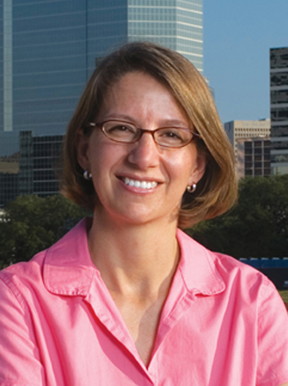 |
| Rebecca Richards-Kortum CREDIT: Rice University |
Abstract:
Rice University bioengineer Rebecca Richards-Kortum and computer scientist Moshe Vardi have joined the elite group of scientists elected to both the National Academy of Sciences and the National Academy of Engineering.
Rice University's Richards-Kortum, Vardi elected to National Academy of Sciences: Bioengineer, computer scientist join elite list of dual-academy members
Houston, TX | Posted on April 29th, 2015Richards-Kortum, Rice's Stanley C. Moore Professor of Bioengineering and professor of electrical and computer engineering, and Vardi, Rice’s Karen Ostrum George Distinguished Service Professor of Computational Engineering and professor of computer science, are among 84 new National Academy of Sciences members announced Tuesday. Richards-Kortum was elected to the National Academy of Engineering in 2008 and Vardi in 2002.
The National Academy of Sciences, National Academy of Engineering and Institute of Medicine (whose name will change July 1 to National Academy of Medicine) are private, nonprofit membership organizations that elect the country’s leading scientists, engineers and medical professionals and engage in a wide variety of activities to advance research and knowledge in science, engineering and medicine. Fewer than 5 percent of National Academy members have dual membership in multiple academies.
"Rebecca and Moshe are very worthy of this distinctive honor, which reflects the high caliber of Rice University faculty," Provost George McLendon said. "We're very proud of them and delighted that they have earned the respect of their peers who elected them to the National Academy of Sciences."
"It is such an honor to be recognized and be part of a group like this," said Richards-Kortum, who also serves as director of Rice 360°: Institute for Global Health Technologies and director of the Rice Institute of Biosciences and Bioengineering. "I'd especially like to acknowledge and recognize the contributions of all my students. It has really been my privilege to work with such a wonderful team."
Richards-Kortum joined Rice's faculty in 2005. Her laboratory focuses on translating research in nanotechnology, molecular imaging and microfabrication to develop optical imaging systems that are inexpensive, portable and provide point-of-care diagnoses for diseases ranging from cancer to malaria. Her research has produced 29 patents, more than 230 research papers, 11 book chapters and the textbook Biomedical Engineering for Global Health.
Richards-Kortum is a fellow of the American Academy of Arts and Sciences, the Optical Society of America, the American Institute for Medical and Biological Engineering, the American Association for the Advancement of Science, the Biomedical Engineering Society and the National Academy of Inventors. She also is an inaugural member of the National Advisory Council for Biomedical Imaging and Bioengineering for the National Institutes of Health. Among her previous honors are the 2013 Lemelson-MIT Award for Global Innovation, the 2014 Michael S. Feld Biophotonics Award from the Optical Society of America and the 2007 Chester F. Carlson Award from the American Society for Engineering Education.
"Recognition by one's peers is the goal of every scientist," said Vardi, who also serves as director of Rice's Ken Kennedy Institute for Information Technology. "Getting elected to the National Academy of Sciences is the ultimate peer recognition."
Vardi joined Rice's faculty in 1993. His research interests include applications of logic to computer science, database systems, computational complexity theory, multiagent systems and specification and verification of hardware and software. He is the author or co-author of more than 500 technical articles and of two books, "Reasoning about Knowledge" and "Finite Model Theory and Its Applications."
Vardi is a member of the American Academy of Arts and Sciences, the European Academy of Sciences and the Academia Europaea. He is a fellow of the Association of Computing Machinery, the Institute for Electrical and Electronics Engineers (IEEE) and the Society for Industrial and Applied Mathematics. Among his prior honors are the Southeastern Universities Research Association's 2013 Distinguished Scientist Award, the 2011 IEEE Computer Society Harry H. Goode Award, the 2008 Blaise Pascal Medal for Computer Science by the European Academy of Sciences and the 2000 Goedel Prize for outstanding papers in the area of theoretical computer science.
Dual-academy membership is an honor Vardi and Richards-Kortum share with only four other faculty members throughout Rice's 103-year history: former provosts David Auston and William Gordon; Naomi Halas, the Stanley C. Moore Professor of Electrical and Computer Engineering and professor of chemistry, bioengineering, physics and astronomy, and materials science and nanoengineering; and Antonios Mikos, the Louis Calder Professor of Bioengineering and Chemical and Biomolecular Engineering and a professor of materials science and nanoengineering.
Rice's other members of the National Academy of Sciences are Robert Curl, Herbert Levine, K.C. Nicolaou, José Onuchic, Peter Rossky and Peter Wolynes.
####
About Rice University
Located on a 300-acre forested campus in Houston, Rice University is consistently ranked among the nation's top 20 universities by U.S. News & World Report. Rice has highly respected schools of Architecture, Business, Continuing Studies, Engineering, Humanities, Music, Natural Sciences and Social Sciences and is home to the Baker Institute for Public Policy. With 3,888 undergraduates and 2,610 graduate students, Rice's undergraduate student-to-faculty ratio is 6-to-1. Its residential college system builds close-knit communities and lifelong friendships, just one reason why Rice is ranked among some of the top schools for best quality of life by the Princeton Review and for best value among private universities by Kiplinger's Personal Finance.
Follow Rice News and Media Relations on Twitter @RiceUNews.
For more information, please click here
Contacts:
Jade Boyd
713-348-6778
Copyright © Rice University
If you have a comment, please Contact us.Issuers of news releases, not 7th Wave, Inc. or Nanotechnology Now, are solely responsible for the accuracy of the content.
Bookmark:


| Related News Press |
News and information
 Quantum computer improves AI predictions April 17th, 2026
Flexible sensor gains sensitivity under pressure April 17th, 2026
A reusable chip for particulate matter sensing April 17th, 2026
Detecting vibrational quantum beating in the predissociation dynamics of SF6 using time-resolved photoelectron spectroscopy April 17th, 2026
Announcements
A fundamentally new therapeutic approach to cystic fibrosis: Nanobody repairs cellular defect April 17th, 2026
UC Irvine physicists discover method to reverse ‘quantum scrambling’ : The work addresses the problem of information loss in quantum computing system April 17th, 2026
Grants/Sponsored Research/Awards/Scholarships/Gifts/Contests/Honors/Records
Quantum computer improves AI predictions April 17th, 2026
Detecting vibrational quantum beating in the predissociation dynamics of SF6 using time-resolved photoelectron spectroscopy April 17th, 2026
Metasurfaces smooth light to boost magnetic sensing precision January 30th, 2026
Photonics/Optics/Lasers
Metasurfaces smooth light to boost magnetic sensing precision January 30th, 2026
From sensors to smart systems: the rise of AI-driven photonic noses January 30th, 2026
 |
||
 |
||
| The latest news from around the world, FREE | ||
 |
||
|
|
||
| Premium Products | ||
 |
||
|
Only the news you want to read!
Learn More |
||
 |
||
|
Full-service, expert consulting
Learn More |
||
|
|
||