Home > Press > NCKU Research Team Won Gold Medal at Geneva Innovations Exhibition
 |
Abstract:
NCKU Microelectronics and Chemical Engineering students, led by Department of Electrical Engineering and Institute of Microelectronics Prof. Wen-Chau Liu and Department of Chemical Engineering Prof. Huey-Ing Chen, have won gold medal at the 38th International Exhibition of Inventions of Geneva with their Semiconductor Transistor-Type Hydrogen Sensor.
NCKU Research Team Won Gold Medal at Geneva Innovations Exhibition
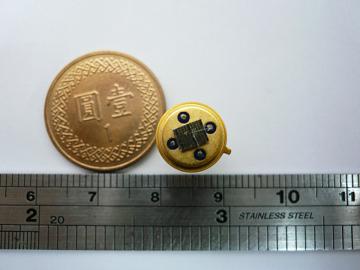
Taiwan | Posted on May 5th, 2010The Semiconductor Transistor-Type Hydrogen Sensor is small in size and light in weight. It only requires little power to operate, saving both energy and carbon. The sensor can detect hydrogen leak within 10 seconds. It has high stability and is helpful to public safety.
Prof. Wen-Chau Liu pointed out, ¡§The Semiconductor Transistor-Type Hydrogen Sensor symbolizes a cross-disciplinary cooperation, integrating electronic, electrical, semiconductor and chemical fields. Traditional transistors mainly adopt silicon (Si) as the fundamental materials, but it cannot survive under high temperature, high radiation or harsh environment such as acid corrosion. On the contrary, the Semiconductor Transistor-Type Hydrogen Sensor applies metals, such as platinum (Pt) and palladium (Pd), which are active catalyst for hydrogen. They have the advantages of high thermal stability, high radiation resistance and excellent chemical resistance.¡¨
Prof. Wen-Chau Liu further explained, ¡§The Semiconductor Transistor-Type Hydrogen Sensor is small in size and light in weight. It is only 0.6g after unpacking. It only requires less than 50 mW of operation power. It can detect hydrogen leak with a concentration as low as 5 ppm within 10 seconds. The sensor can operate between room temperature and 120„aC. With further integration, it can be applied on Integrated Circuit (IC), Micro Electro-Mechanical Systems (MEMS), people¡¦s livelihood and communications.¡¨
The Semiconductor Transistor-Type Hydrogen Sensor is mainly applied on public safety, such as hydrogen leak monitors of chemical factories, hydrogen input monitors required during semiconductor manufacture, hydrogen leak monitors of automotive and aerospace industrial fuel cells and hydrogen leak monitors required during medical equipments manufacture.
Prof. Liu emphasized, ¡§It¡¦s the efforts of NCKU Chemical Engineering Prof. Huey-Ing Chen and students that we received so much attention at International Exhibition of Inventions of Geneva and won the gold medal. By relying on the professional specialty of Prof. Chen, we used water to produce hydrogen and thus further improved the operation of the sensor. The vivid display of the Semiconductor Transistor-Type Hydrogen Sensor has received wide acclaim from the judges.¡¨
Prof. Huey-Ing Chen added, ¡§We came up with the method of water producing hydrogen about a week before the exhibition. The team was inspired by the idea that solar energy and electrolyzed water which could both produce hydrogen. We decided to use electrolyzed water with battery to produce hydrogen. After the water produces hydrogen, the hydrogen is poured into the sensor, which will instantly produce messages such as light and sound and reach an early warning effect.
####
For more information, please click here
Contacts:
No.1, University Road, Tainan City 701, Taiwan (R.O.C.)
TEL: +886-6-2757575
Copyright © National Cheng Kung University
If you have a comment, please Contact us.Issuers of news releases, not 7th Wave, Inc. or Nanotechnology Now, are solely responsible for the accuracy of the content.
Bookmark:


| Related News Press |
News and information
 Quantum computer improves AI predictions April 17th, 2026
Flexible sensor gains sensitivity under pressure April 17th, 2026
A reusable chip for particulate matter sensing April 17th, 2026
Detecting vibrational quantum beating in the predissociation dynamics of SF6 using time-resolved photoelectron spectroscopy April 17th, 2026
MEMS
Sensors
Flexible sensor gains sensitivity under pressure April 17th, 2026
Tiny nanosheets, big leap: A new sensor detects ethanol at ultra-low levels January 30th, 2026
From sensors to smart systems: the rise of AI-driven photonic noses January 30th, 2026
Sensors innovations for smart lithium-based batteries: advancements, opportunities, and potential challenges August 8th, 2025
Announcements
A fundamentally new therapeutic approach to cystic fibrosis: Nanobody repairs cellular defect April 17th, 2026
UC Irvine physicists discover method to reverse ‘quantum scrambling’ : The work addresses the problem of information loss in quantum computing system April 17th, 2026
Automotive/Transportation
Decoding hydrogen‑bond network of electrolyte for cryogenic durable aqueous zinc‑ion batteries January 30th, 2026
Sensors innovations for smart lithium-based batteries: advancements, opportunities, and potential challenges August 8th, 2025
Simple algorithm paired with standard imaging tool could predict failure in lithium metal batteries August 8th, 2025
Aerospace/Space
Decoding hydrogen‑bond network of electrolyte for cryogenic durable aqueous zinc‑ion batteries January 30th, 2026
ICFO researchers overcome long-standing bottleneck in single photon detection with twisted 2D materials August 8th, 2025
Onion-like nanoparticles found in aircraft exhaust May 14th, 2025
 |
||
 |
||
| The latest news from around the world, FREE | ||
 |
||
|
|
||
| Premium Products | ||
 |
||
|
Only the news you want to read!
Learn More |
||
 |
||
|
Full-service, expert consulting
Learn More |
||
|
|
||