Home > Press > New UBC wash removes pesticides and extends produce shelf life: Natural, biodegradable rinse removes up to 96 per cent of pesticide residue and slowed spoilage in apples and grapes
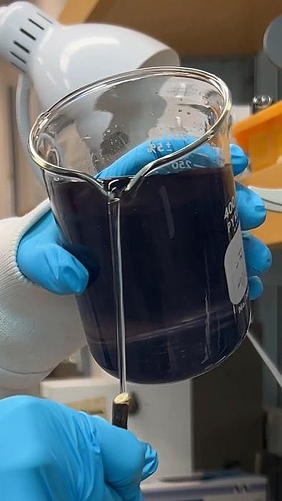 |
| University of British Columbia researchers have developed a natural, biodegradable wash that removed up to 96 per cent of pesticide residue from fruit and slowed browning and moisture loss. Credit Sachi Wickramasinghe/UBC Media Relations |
Abstract:
University of British Columbia researchers have developed a natural, biodegradable wash that removed up to 96 per cent of pesticide residue from fruit and slowed browning and moisture loss.
New UBC wash removes pesticides and extends produce shelf life: Natural, biodegradable rinse removes up to 96 per cent of pesticide residue and slowed spoilage in apples and grapes
Vancouver, Canada | Posted on April 17th, 2026This could mean safer apples, grapes and other fruit that also stays fresh and crisp for days longer. With rising food prices and nearly half of all fresh produce wasted worldwide each year, finding a way to cut pesticide exposure and reduce spoilage could have a big impact. The findings were published in ACS Nano.
“Our goal was to create a simple, safe and affordable wash that improves both food safety and food quality,” said senior author Dr. Tianxi Yang, an assistant professor in UBC’s faculty of land and food systems. “People shouldn’t have to choose between eating fresh produce and worrying about what’s on it.”
A safe, plant‑based way to clean produce
While pesticide levels on fruits and vegetables are tightly regulated, trace residues often remain. For people who eat a lot of the same fruit or vegetables—like kids scarfing down big bowls of berries—the amount of residue can go over recommended limits. It was this concern, prompted by Dr. Yang’s son’s love of fresh blueberries, that sparked her search for a better way to clean fruit.
The new wash uses tiny particles made from starch—the same carbohydrate found in corn and potatoes—capped in iron and tannic acid. Tannic acid is a plant compound that gives tea and wine their dry taste. When iron and tannic acid join together, they form sticky, sponge‑like clusters that can grab onto pesticides and lift them off the fruit’s surface.
The team tested the wash by applying three commonly used pesticides to apples at typical, real-world concentrations of about 10 milligrams per litre.
In tests on apples, the wash removed between 86 and 96 per cent of these pesticides. Rinsing with tap water, baking soda or plain starch typically removes less than half.
A coating that keeps fruit fresher, longer
After washing, the fruit is dipped in the solution once again to form a light edible, biodegradable layer. Fresh‑cut apples treated with the coating browned much more slowly and lost less water over two days in the fridge. Whole grapes stayed plump for 15 days at room temperature, compared with noticeable shriveling in untreated grapes.
“The coating acts like a breathable second skin. Measures of food quality like acidity and soluble sugars also remained higher in coated fruit,” said Dr. Yang.
The coating also showed antimicrobial effects, meaning it can inhibit harmful bacteria.
The study estimated that washing a medium apple in the solution would introduce a safe amount of iron, well below the daily upper limit for adults set by North American food authorities.
“Beyond safety and shelf life, our formulation uses micronutrients like iron and phenolic compounds that offer additional health benefits,” said Dr. Yang. “It doesn’t just reduce risk—it can also add nutritional value.”
From commercial processing to kitchen sinks
Because the ingredients are inexpensive and are mixed using water, the researchers say the wash could be scaled easily for industry use. The team is now working on refining, scaling and testing the formula for use in commercial processing facilities, where fruit is cleaned before shipping.
“Our early cost estimates suggest it would add roughly three cents per apple—comparable to current commercial coatings, but with the added benefit of pesticide removal and extending shelf life,” said Dr. Yang.
The team also sees potential for a home version. “Imagine a spray or tablet you could add to water right before washing your fruit,” said Dr. Yang. The team notes that more testing is needed before household use, including regulatory review and real‑world studies with different fruits and washing habits.
“Our hope,” said Dr. Yang, “is to help people feel confident about the produce they bring home—knowing it’s safer, lasts longer and creates less waste.”
This research was supported by the Faculty of Land and Food Systems Start Up Fund, Natural Sciences and Engineering Research Council of Canada (NSERC), Canada Foundation for Innovation (CFI) and the British Columbia Knowledge Development Fund (BCKDF.)
####
For more information, please click here
Contacts:
Sachi Wickramasinghe
University of British Columbia
Office: 604-754-8289
Copyright © University of British Columbia
If you have a comment, please Contact us.Issuers of news releases, not 7th Wave, Inc. or Nanotechnology Now, are solely responsible for the accuracy of the content.
Bookmark:


| Related Links |
| Related News Press |
News and information
 Quantum computer improves AI predictions April 17th, 2026
Flexible sensor gains sensitivity under pressure April 17th, 2026
A reusable chip for particulate matter sensing April 17th, 2026
Detecting vibrational quantum beating in the predissociation dynamics of SF6 using time-resolved photoelectron spectroscopy April 17th, 2026
Possible Futures
A fundamentally new therapeutic approach to cystic fibrosis: Nanobody repairs cellular defect April 17th, 2026
UC Irvine physicists discover method to reverse ‘quantum scrambling’ : The work addresses the problem of information loss in quantum computing system April 17th, 2026
Discoveries
Quantum computer improves AI predictions April 17th, 2026
Flexible sensor gains sensitivity under pressure April 17th, 2026
A reusable chip for particulate matter sensing April 17th, 2026
Detecting vibrational quantum beating in the predissociation dynamics of SF6 using time-resolved photoelectron spectroscopy April 17th, 2026
Announcements
A fundamentally new therapeutic approach to cystic fibrosis: Nanobody repairs cellular defect April 17th, 2026
UC Irvine physicists discover method to reverse ‘quantum scrambling’ : The work addresses the problem of information loss in quantum computing system April 17th, 2026
Interviews/Book Reviews/Essays/Reports/Podcasts/Journals/White papers/Posters
A fundamentally new therapeutic approach to cystic fibrosis: Nanobody repairs cellular defect April 17th, 2026
UC Irvine physicists discover method to reverse ‘quantum scrambling’ : The work addresses the problem of information loss in quantum computing system April 17th, 2026
Food/Agriculture/Supplements
New imaging approach transforms study of bacterial biofilms August 8th, 2025
SMART researchers pioneer first-of-its-kind nanosensor for real-time iron detection in plants February 28th, 2025
Night-time radiative warming using the atmosphere November 17th, 2023
 |
||
 |
||
| The latest news from around the world, FREE | ||
 |
||
|
|
||
| Premium Products | ||
 |
||
|
Only the news you want to read!
Learn More |
||
 |
||
|
Full-service, expert consulting
Learn More |
||
|
|
||