Home > Press > Towards Quantum Dot Lasers with Temperature Independent Threshold
 |
Abstract:
Among the numerous applications envisioned for semiconductor nanocrystals, quantum dot lasers are one of the most interesting. In contrast to bulk materials, the delta-like density of quantum dot electronic states predicts a low, temperature-independent lasing threshold. This gives enhanced device performance compared to other gain media, especially at elevated temperatures. Quantum dots grown by epitaxial techniques have proven to be suitable candidates for potential commercialization of quantum dot lasers. However, colloidal quantum dots offer an interesting low-cost alternative, being synthesized through wet chemistry at low temperature and standard pressure.
Towards Quantum Dot Lasers with Temperature Independent Threshold
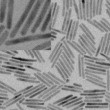
Germany | Posted on October 11th, 2012Now, Iwan Moreels, Gabriele Rainò (IBM Research - Zurich), and co-workers have successfully produced colloidal CdSe/CdS quantum dot-in-rods with an almost constant amplified stimulated emission threshold over a temperature interval from 5-325 K. This feature is unique to quantum dots and highlights their potential as a gain material, suitable for lasing at elevated temperatures. These results will pave the way towards low cost, solution processable quantum dot lasers.
The research was reported in Advanced Optical Materials, a new section in Advanced Materials dedicated to breakthrough discoveries and fundamental research in photonics, plasmonics, metamaterials, and more, covering all aspects of light-matter interactions.
####
For more information, please click here
Copyright © Wiley-VCH Materials Science Journals
If you have a comment, please Contact us.Issuers of news releases, not 7th Wave, Inc. or Nanotechnology Now, are solely responsible for the accuracy of the content.
Bookmark:


| Related Links |
 To get Advanced Optical Materials email alerts click here:
Link to the original paper on Wiley Online Library:
| Related News Press |
News and information
Quantum computer improves AI predictions April 17th, 2026
Flexible sensor gains sensitivity under pressure April 17th, 2026
A reusable chip for particulate matter sensing April 17th, 2026
Detecting vibrational quantum beating in the predissociation dynamics of SF6 using time-resolved photoelectron spectroscopy April 17th, 2026
Discoveries
Quantum computer improves AI predictions April 17th, 2026
Flexible sensor gains sensitivity under pressure April 17th, 2026
A reusable chip for particulate matter sensing April 17th, 2026
Detecting vibrational quantum beating in the predissociation dynamics of SF6 using time-resolved photoelectron spectroscopy April 17th, 2026
Announcements
A fundamentally new therapeutic approach to cystic fibrosis: Nanobody repairs cellular defect April 17th, 2026
UC Irvine physicists discover method to reverse ‘quantum scrambling’ : The work addresses the problem of information loss in quantum computing system April 17th, 2026
Quantum Dots/Rods
A new kind of magnetism November 17th, 2023
IOP Publishing celebrates World Quantum Day with the announcement of a special quantum collection and the winners of two prestigious quantum awards April 14th, 2023
Qubits on strong stimulants: Researchers find ways to improve the storage time of quantum information in a spin rich material January 27th, 2023
NIST’s grid of quantum islands could reveal secrets for powerful technologies November 18th, 2022
Photonics/Optics/Lasers
Metasurfaces smooth light to boost magnetic sensing precision January 30th, 2026
From sensors to smart systems: the rise of AI-driven photonic noses January 30th, 2026
 |
||
 |
||
| The latest news from around the world, FREE | ||
 |
||
|
|
||
| Premium Products | ||
 |
||
|
Only the news you want to read!
Learn More |
||
 |
||
|
Full-service, expert consulting
Learn More |
||
|
|
||