Home > Press > New nanoparticle reference materials support development of novel applications
 |
Abstract:
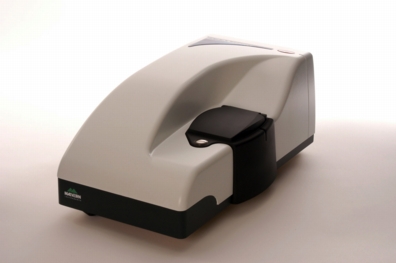
The National Institute of Standards and Technology (NIST) has used the Zetasizer Nano particle characterization system from Malvern Instruments as part of the qualification and assessment process for its new gold nanoparticle reference materials. The three new reference materials, launched in January of this year, were developed in cooperation with the National Cancer Institute's Nanotechnology Characterization Laboratory (NCL). They will facilitate data consistency across pre-clinical biomedical research and accelerated development of methodologies and applications that rely on nanoscale measurements.
New nanoparticle reference materials support development of novel applications
Malvern, UK | Posted on August 28th, 2008Reference Materials (RM) are designed specifically to enable interlaboratory test comparisons. The previous lack of nanoparticle standards, used to verify the accuracy of measurements and ensure that data are robust, has made the advancement of new measurement methods that rely on nanoscale parameters difficult.
Nanotechnology holds the promise of increased speed and efficiency across many analytical systems. The nominal 10, 30 and 60 nanometre gold spheres are the first nanoscale standard references. They represent the advent of much needed standardization at this scale and, by enabling evaluation and qualification of methodologies and instrument performance, should expedite swifter development and approval of novel techniques and applications.
The new RMs were evaluated using six independent methods - atomic force microscopy (AFM), transmission electron microscopy (TEM), scanning electron microscopy (SEM), differential mobility analysis (DMA), dynamic light scattering (DLS - Zetasizer Nano), and small-angle X-ray scattering (SAXS). While NIST neither recommends nor endorses instrumentation, Malvern is pleased to note that the Zetasizer Nano and 3000HS were used in the assessment processes.
####
About Malvern Instruments Ltd
Malvern Instruments is a global company that develops, manufactures and markets advanced analytical systems used in characterizing a wide variety of materials, from bulk powders to the latest nanomaterials and delicate macromolecules. Innovative technologies and powerful software produce systems that deliver industrially relevant data enabling customers to make the connection between micro (eg particle size) and macro (bulk) material properties (rheology) and chemical composition (chemical imaging). Malvern laboratory, on-line and in-line solutions are proven in sectors from cement to pharmaceuticals and support the understanding, improvement and optimization of many industrial processes.
Headquartered in Malvern, UK, the company has subsidiary organizations in all major European markets, North America, China, Korea and Japan, key partnerships in India, a global distributor network and a number of applications laboratories around the world.
Malvern, Malvern Instruments and Zetasizer are registered trademarks of Malvern Instruments Ltd
For more information, please click here
Contacts:
For press information, please contact:
Trish Appleton
Kapler Communications
Knowledge Centre
Wyboston Lakes
Great North Road
Wyboston
Bedfordshire
MK44 3BY, UK
Tel: +44 (0)1480 479280;
Fax: +44 (0)1480 470343
USA contact:
Marisa Fraser
Malvern Instruments Inc.
117 Flanders Road
Westborough, MA 01581-1042
USA
Tel: +1 508 768 6400
Fax: +1 508 768 6403
Please send sales enquiries to:
Alison Vines
Malvern Instruments Ltd
Enigma Business Park
Grovewood Road
Malvern
Worcestershire
WR14 1XZ UK
Tel: +44 (0) 1684 892456;
Fax: +44 (0) 1684 892789
Copyright © Malvern Instruments Ltd
If you have a comment, please Contact us.Issuers of news releases, not 7th Wave, Inc. or Nanotechnology Now, are solely responsible for the accuracy of the content.
Bookmark:


| Related News Press |
News and information
 Quantum computer improves AI predictions April 17th, 2026
Flexible sensor gains sensitivity under pressure April 17th, 2026
A reusable chip for particulate matter sensing April 17th, 2026
Detecting vibrational quantum beating in the predissociation dynamics of SF6 using time-resolved photoelectron spectroscopy April 17th, 2026
Chemistry
Projecting light to dispense liquids: A new route to ultra-precise microdroplets January 30th, 2026
From sensors to smart systems: the rise of AI-driven photonic noses January 30th, 2026
"Nanoreactor" cage uses visible light for catalytic and ultra-selective cross-cycloadditions October 3rd, 2025
Cambridge chemists discover simple way to build bigger molecules – one carbon at a time June 6th, 2025
Govt.-Legislation/Regulation/Funding/Policy
Quantum computer improves AI predictions April 17th, 2026
Metasurfaces smooth light to boost magnetic sensing precision January 30th, 2026
New imaging approach transforms study of bacterial biofilms August 8th, 2025
Announcements
A fundamentally new therapeutic approach to cystic fibrosis: Nanobody repairs cellular defect April 17th, 2026
UC Irvine physicists discover method to reverse ‘quantum scrambling’ : The work addresses the problem of information loss in quantum computing system April 17th, 2026
 |
||
 |
||
| The latest news from around the world, FREE | ||
 |
||
|
|
||
| Premium Products | ||
 |
||
|
Only the news you want to read!
Learn More |
||
 |
||
|
Full-service, expert consulting
Learn More |
||
|
|
||