Home > Press > Iran World’s Second Largest Producer of Nano-Catalysts
 |
Abstract:
Catalysts, which are widely used in oil, petrochemical, automotive and pharmaceutical industries, are among the most important and strategic requirements for a country’s industrial development.
Iran World’s Second Largest Producer of Nano-Catalysts
Tehran, Iran | Posted on October 17th, 2018Developing the technical knowledge and the knowhow for production of catalysts eliminates dependence on foreign countries.
It also keeps the hard currency inside the country, and creates more jobs and further capacity for domestic production.
Nano Pars Spadana group started its operation in 2001 with the aim of eliminating the country’s dependence on imported nanoparticles and nano-catalysts.
With a team of researchers including experts of chemistry, polymer, metallurgy, fluid mechanics, etc., the group began extensive research on nanotechnology and achieved excellent results in this field. Finally, the group managed to synthesize nanoparticles through a method called “Shoj”.
In addition to production of oxide nanoparticles, the method can also be used to produce multiphase mixed nanoparticles, which cannot be produced otherwise.
The company has been able to successfully develop from a laboratory group to a semi-industrial and industrial group within 6 years.
Enjoying the capability of producing nanoparticles and nano-catalysts, Nano Pars Spadana started to design, manufacture and install equipment and production lines on an industrial scale.
The company was also able to set up the first nanoparticles and nano-catalysts manufacturing unit and managed to sign a contract with the National Iranian Oil Refining and Distribution Company for the production of catalysts.
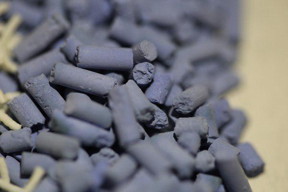
The latest achievement of the company is the production of Benzene chlorination catalyst. This is the eighth chlorination catalyst produced by the company. The catalyst is used by Arvand Petrochemicals Company to remove Benzene from PVC.
Germany was the only manufacturer of this kind of chemical in the world, and now Iran is the second largest country in the world that produces this type of catalyst.
Nano Pars Spadana is one of the leading companies participating in the 2018 International Nanotechnology Exhibition, which is underway in Tehran.
####
For more information, please click here
Contacts:
Iran Front Page
Phone: 98 (21) 7752 8888
Fax: 98 (21) 7753 5454
Copyright © Iran World’s Second Largest Producer of Nano-Catalysts
If you have a comment, please Contact us.Issuers of news releases, not 7th Wave, Inc. or Nanotechnology Now, are solely responsible for the accuracy of the content.
Bookmark:


| Related News Press |
News and information
 Quantum computer improves AI predictions April 17th, 2026
Flexible sensor gains sensitivity under pressure April 17th, 2026
A reusable chip for particulate matter sensing April 17th, 2026
Detecting vibrational quantum beating in the predissociation dynamics of SF6 using time-resolved photoelectron spectroscopy April 17th, 2026
Chemistry
Projecting light to dispense liquids: A new route to ultra-precise microdroplets January 30th, 2026
From sensors to smart systems: the rise of AI-driven photonic noses January 30th, 2026
"Nanoreactor" cage uses visible light for catalytic and ultra-selective cross-cycloadditions October 3rd, 2025
Cambridge chemists discover simple way to build bigger molecules – one carbon at a time June 6th, 2025
Announcements
A fundamentally new therapeutic approach to cystic fibrosis: Nanobody repairs cellular defect April 17th, 2026
UC Irvine physicists discover method to reverse ‘quantum scrambling’ : The work addresses the problem of information loss in quantum computing system April 17th, 2026
Events/Classes
Institute for Nanoscience hosts annual proposal planning meeting May 16th, 2025
A New Blue: Mysterious origin of the ribbontail ray’s electric blue spots revealed July 5th, 2024
Researchers demonstrate co-propagation of quantum and classical signals: Study shows that quantum encryption can be implemented in existing fiber networks January 20th, 2023
Grants/Sponsored Research/Awards/Scholarships/Gifts/Contests/Honors/Records
Quantum computer improves AI predictions April 17th, 2026
Detecting vibrational quantum beating in the predissociation dynamics of SF6 using time-resolved photoelectron spectroscopy April 17th, 2026
Metasurfaces smooth light to boost magnetic sensing precision January 30th, 2026
 |
||
 |
||
| The latest news from around the world, FREE | ||
 |
||
|
|
||
| Premium Products | ||
 |
||
|
Only the news you want to read!
Learn More |
||
 |
||
|
Full-service, expert consulting
Learn More |
||
|
|
||