Home > Press > Professor Geoffrey Ozin is 2011 Barrer Award Recipient
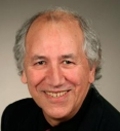 |
| Professor Geoffrey Ozin |
Abstract:
Professor Geoffrey Ozin, Canada Research Chair in Materials Science at the University of Toronto, has been selected by the Royal Society of Chemistry to receive the 2011 Barrer award for his major contributions to fundamental scientific & technological advances in the field of nanoporous materials.
Professor Geoffrey Ozin is 2011 Barrer Award Recipient
Toronto, Canada | Posted on August 30th, 2011The Barrer award is presented every three years to a researcher who has performed meritorious recent pure or applied work in the field of porous inorganic materials, and is named for Richard Maling Barrer, chemist, membrane scientist, and the founder of zeolite chemistry.
Citing his creative contributions to the field of nanotechnology, the RSC names Professor Ozin as "one of the first to identify the importance of materials filled with nanoscale holes", and cite two revolutionary papers, Advanced Zeolite Materials Science, published in 1989 in Angewandte Chemie, and Nanochemistry - Synthesis in Diminishing Dimensions, published in Advanced Materials in 1992.
This research has since gone on to spawn a whole field of scientific endeavor, touching areas such as sensing, energy, and even healthcare: some of the latest breakthroughs in the field include nanocrystalline tin that stores the lithium for Li-ion batteries in its pores, and the nanoporous silicon microparticles that ferry therapeutic nanoparticles to bone marrow.
####
For more information, please click here
Copyright © Wiley-VCH Materials Science Journals
If you have a comment, please Contact us.Issuers of news releases, not 7th Wave, Inc. or Nanotechnology Now, are solely responsible for the accuracy of the content.
Bookmark:


| Related Links |
| Related News Press |
News and information
 Quantum computer improves AI predictions April 17th, 2026
Flexible sensor gains sensitivity under pressure April 17th, 2026
A reusable chip for particulate matter sensing April 17th, 2026
Detecting vibrational quantum beating in the predissociation dynamics of SF6 using time-resolved photoelectron spectroscopy April 17th, 2026
Chemistry
Projecting light to dispense liquids: A new route to ultra-precise microdroplets January 30th, 2026
From sensors to smart systems: the rise of AI-driven photonic noses January 30th, 2026
"Nanoreactor" cage uses visible light for catalytic and ultra-selective cross-cycloadditions October 3rd, 2025
Cambridge chemists discover simple way to build bigger molecules – one carbon at a time June 6th, 2025
Materials/Metamaterials/Magnetoresistance
First real-time observation of two-dimensional melting process: Researchers at Mainz University unveil new insights into magnetic vortex structures August 8th, 2025
Researchers unveil a groundbreaking clay-based solution to capture carbon dioxide and combat climate change June 6th, 2025
A 1960s idea inspires NBI researchers to study hitherto inaccessible quantum states June 6th, 2025
Institute for Nanoscience hosts annual proposal planning meeting May 16th, 2025
Announcements
A fundamentally new therapeutic approach to cystic fibrosis: Nanobody repairs cellular defect April 17th, 2026
UC Irvine physicists discover method to reverse ‘quantum scrambling’ : The work addresses the problem of information loss in quantum computing system April 17th, 2026
Grants/Sponsored Research/Awards/Scholarships/Gifts/Contests/Honors/Records
Quantum computer improves AI predictions April 17th, 2026
Detecting vibrational quantum beating in the predissociation dynamics of SF6 using time-resolved photoelectron spectroscopy April 17th, 2026
Metasurfaces smooth light to boost magnetic sensing precision January 30th, 2026
 |
||
 |
||
| The latest news from around the world, FREE | ||
 |
||
|
|
||
| Premium Products | ||
 |
||
|
Only the news you want to read!
Learn More |
||
 |
||
|
Full-service, expert consulting
Learn More |
||
|
|
||